
What is Tuning?
In short, "tuning" refers to the way the user manipulates the singer's voice to create their desired result. They obtain results by editing vocal parameters such as breath, tension,
pitch, and gender factor. I'll show you how these parameters can affect the results, using my own projects as an example.
In the greater vocal synth community, "tuning" is often synonymous to a vocal synth producer's "signature." Where human vocalists have their own preferred ways of singing and expressing
themselves, each vocal synth producer has their own preferences on manipulating their virtual singer's voice.
Parameters & How they work
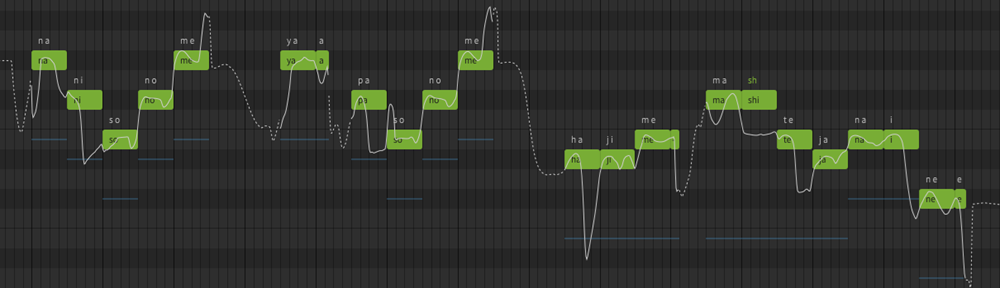
Pitch DeviationPitch deviation is the simplest form of tuning. This is how you manipulate the pitch of each note. In most vocal synthesizers, you can edit the pitch directly on the notes using the line crossing through them.
Vibrato Envelope
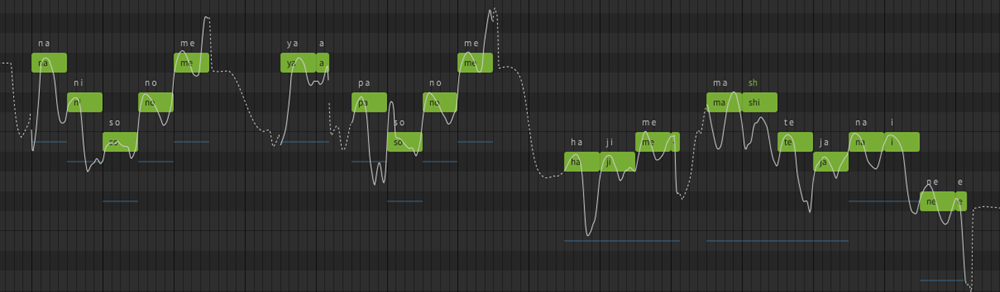
The vibrato envelope dictates how much vibrato should be added to the note. In layman terms, it dictates how extreme the pitch fluctuations in a note are. It can be utilized for growl effects and operatic singing. It does not have a signficant impact on shorter notes, unless the envelope is set to its maximum.
Loudness
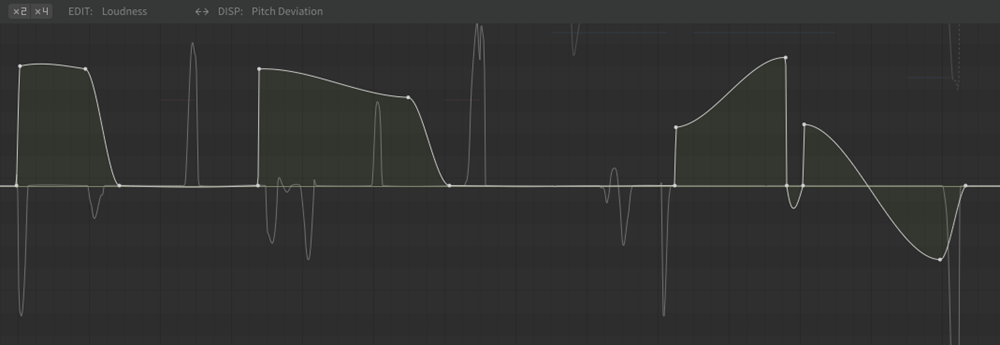
Loudness controls the volume of a note. In Synthesizer V's editor, you can increase or decrease the note's volume by ±24 decibels. It is normally edited to creater a softer or louder, punchier effect to the vocal performance.
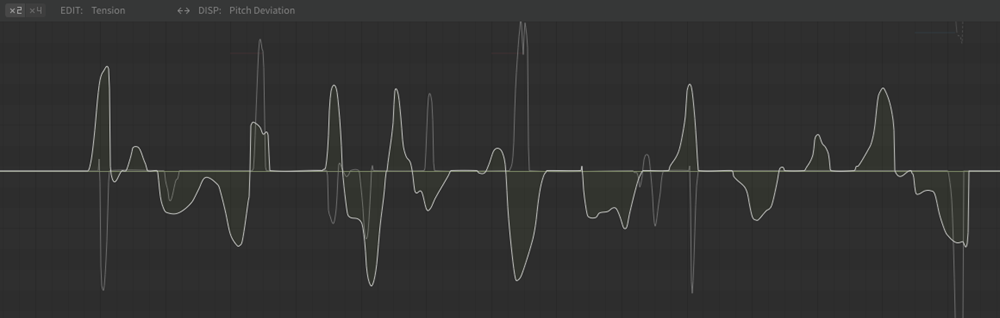
Tension describes how much resistance is being applied on the vocal chords. With less resistance (less tension), you can produce an light, airy voice perfect for a calm ballad. With more resistance (more tension), a harsher sound can be created on the note, leaving very little room for air. It produces something similar to "spitting" out a word.
Breathiness
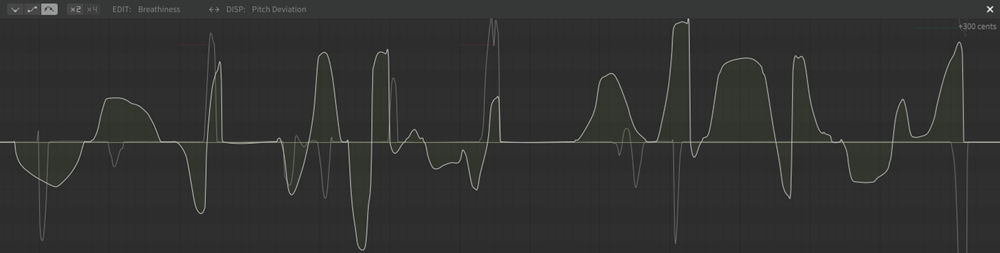
Breathiness controls how much air is being taken in on each note. Less breath will create a solid, clean vocal. Breathiness is often used to create inhales, exhales, and
exasperation in the delivery of the performance. It can be really useful to you when considering the emotional impact you want your virtual singer to express!
The song I am using for these demos, "Monstrous Flower" by Nakiso, is a song with a lot of desperation and fear written into its lyrics. Breathiness can help to convey the panic in the
singer's expression.
Gender Factor
The Gender Factor controls how masculine or feminine the vocal will sound. In human voices, the most natural way we achieve this is by the movement of the larynx. Extreme editing
of this parameter can make your vocalist sound unnatural and filtered. It's definitely possible to edit the gender factor to replicate the natural fluctuation of the larynx, so long as it's
in moderation. Unless... you're trying to achieve something abnormal?
The demo here is covering the song "Mixing Juice" by nadashizuku, a song that has a lot of interesting audio quirks. The original virtual singer used, vflower, has a very raspy voice that
fits well with the distortion in the song. In my cover, I decided to create unique harmonies with unusual vocal effects.
Now that you know about tuning, how does this make virtual singers unique? Well, not everyone tunes the same way. Despite Hatsune Miku being the most widely-used virtual singer of all time, she can sound incredibly different depending on who's using her. This goes with any virtual singer, really. A niche trend came about where individuals would attempt to replicate the tuning styles of their favorite producers, to better highlight this phenomenon. Have a listen to a few!
Although I'm a bit rusty, here's the current progress of a cover I've been hard at work on. Consider this an example of my own tuning style.